The Road to Quillabamba
As humans, especially in Western cultures, we tend to reduce complex historical processes into discrete moments. Odoacer’s overthrow of Emperor Romulus Augustus in 476 AD is generally held to mark the end of the Western Roman Empire. Others would argue that the Vandals’ sack of Rome two decades earlier, in 455 AD, had already ended Rome’s hegemony.
But empires rarely end as cleanly as textbooks suggest. After 476, Odoacer governed with the support of the Roman Senate, preserved many imperial institutions, and even nominally positioned himself as a vassal of Zeno, emperor of the Eastern Roman Empire. Like The Who said: meet the new boss, same as the old boss.
The fall of the Inca Empire offers a more dramatic image. In 1572, Spanish forces entered Vilcabamba, the last stronghold of Inca resistance. Túpac Amaru I, the final ruler of the Neo-Inca State, was later captured, taken to Cusco, and publicly executed. Although Quechua culture survived, the institutions the Inca had built over more than a century were systematically dismantled as the Spaniards imposed colonial rule in the New World.
Despite the Spaniards’ best efforts to erase their legacy, the Incas are still known today, among many other things, for their impressive road system. This contrasts with modern Peru’s constant fight against nature to maintain its own road network. Geological activity, steep terrain, landslides during the rainy season, and recurring road blockages are not exceptional events, but structural constraints in the lives of Andean rural communities.
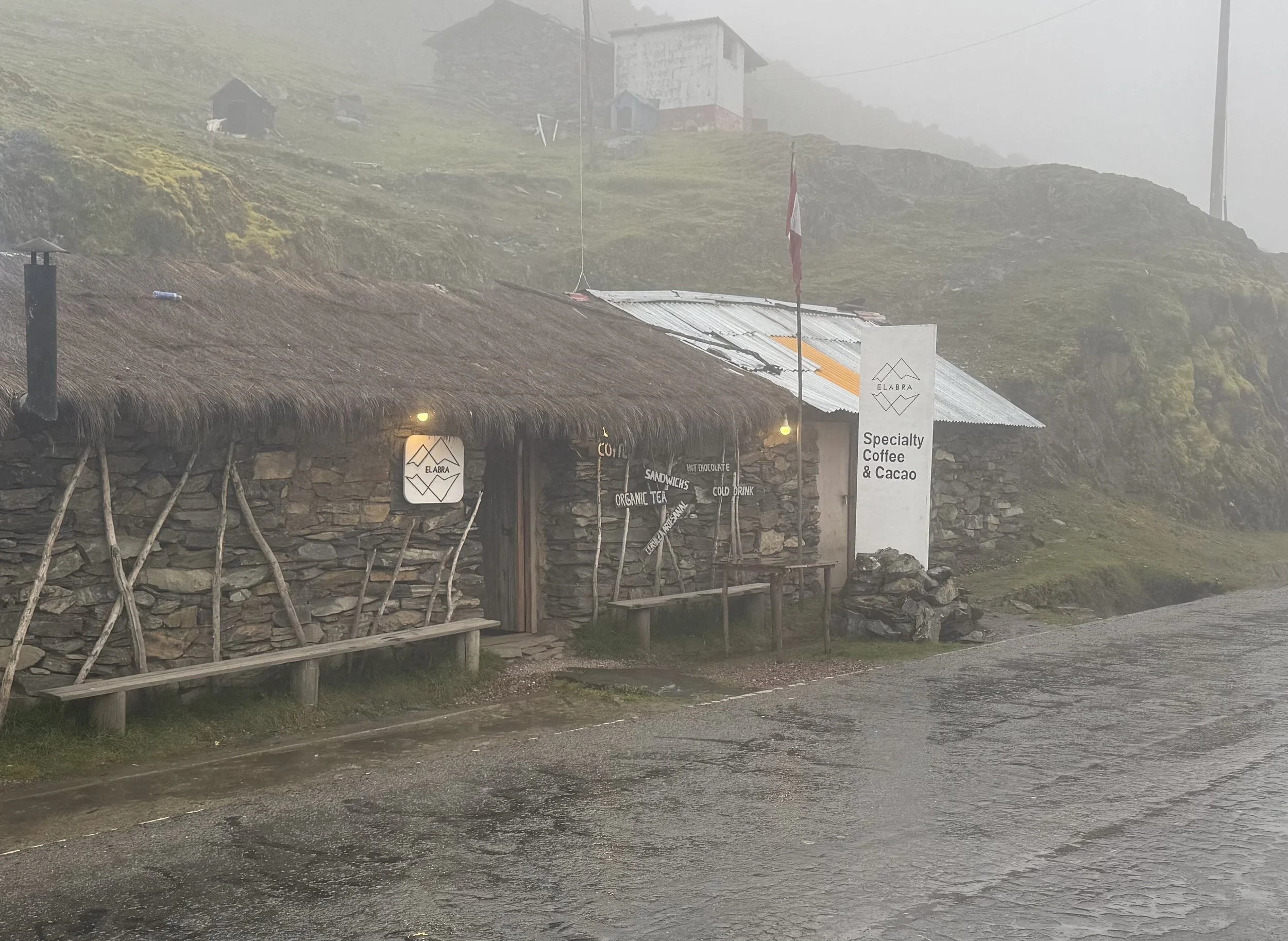
The road from Cusco to Quillabamba is no exception. It is equally majestic and strenuous. From Cusco, at roughly 3,300 metres above sea level, you first descend into the Sacred Valley, passing archaeological sites such as Ollantaytambo, before climbing again toward El Abra de Málaga at more than 4,300 metres.
There, the barren landscape is scattered with small potato farms and alpaca herds. A specialty coffee shop, ElAbra, stands out as a beacon of modern comfort in an otherwise otherworldly setting. The slight hypoxemia caused by the thin air, at least for my sea-level-dwelling body, added to the dreamlike quality of the place.
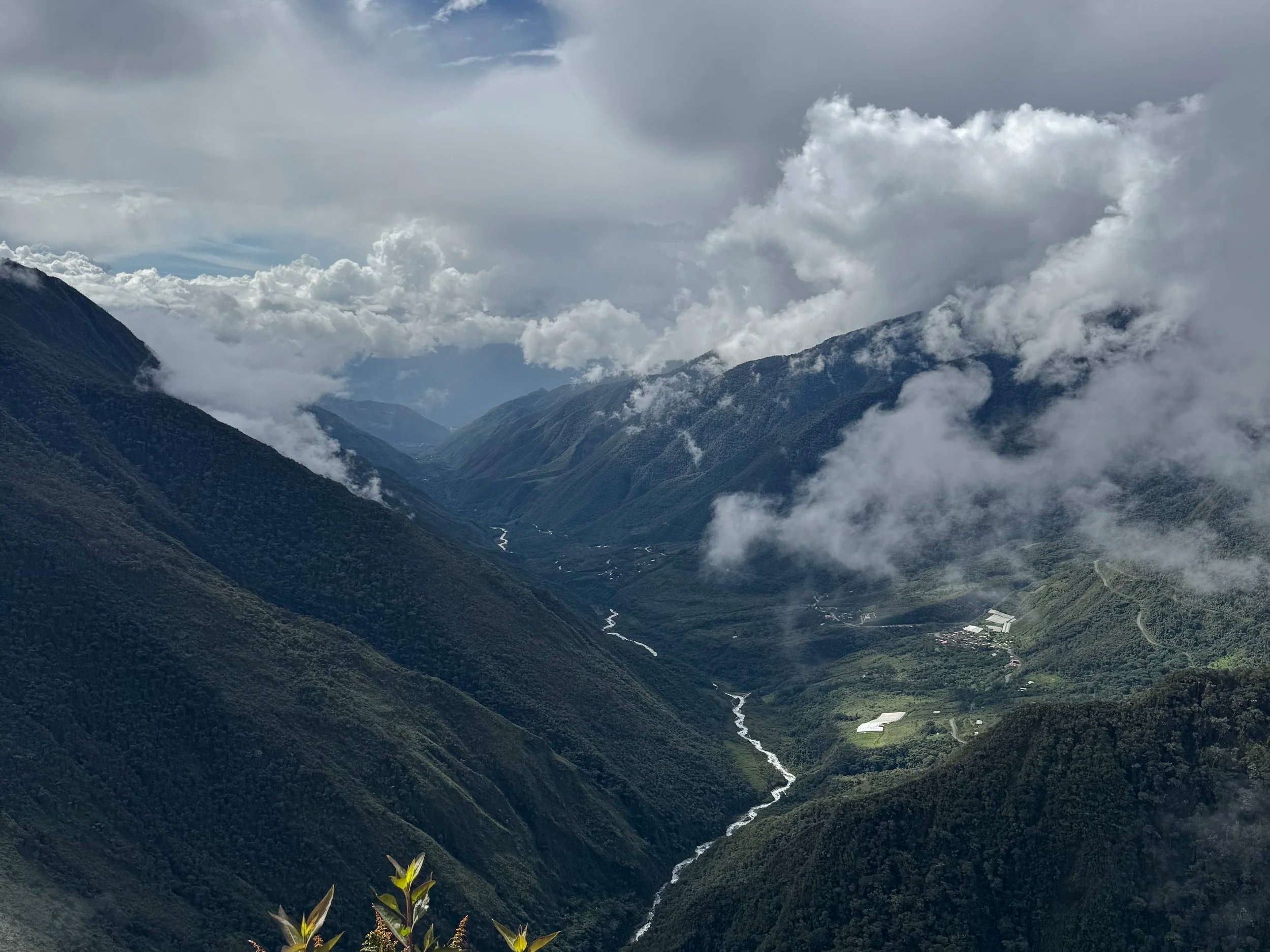
After a coffee break, you begin the descent through winding switchbacks, shedding more than three kilometres of altitude before reaching the self-proclaimed City of Eternal Summer: Quillabamba.
I was in town to visit Kuska, one of Ecotierra’s projects within the Urapi fund, during the installation of new milling equipment. While there, I had the chance to learn about some of the Quechua principles that survived Spanish colonial rule.
Ayni, for instance, is the concept of mutualism and reciprocity between members of a community. In coffee-farming communities, this can translate into farmers working on their neighbours’ farms during labour-intensive periods, such as harvest, with reciprocity as the only expected form of compensation.
That idea stayed with me as we visited the mill. Coffee may eventually become a commodity contract, an export document, a cupping score, or a line item in a buyer’s inventory system, but it begins as something much more physical: cherries picked by hand, sacks carried from hillside farms, parchment drying, trucks waiting, farmers deciding whether to sell now or hold on a little longer.
It is easy, from far away, to talk about value chains as if they were diagrams. In the field, they look more like a sequence of moments where someone has to make a decision with imperfect information, limited cash, and very little margin for error.
These traditional practices still survive today, but they now operate inside systems shaped by colonial structures and capitalist mechanisms: property rights, contracts, markets, tax regimes, and export channels. The fundamental problem communities face today is not capitalism itself, but the asymmetry through which capitalist institutions were introduced and later embedded: communities were exposed to markets without equivalent access to power, capital, infrastructure, or institutional literacy.
To understand the asymmetry, it helps to compare coffee with a more standardized commodity such as wheat. A wheat farmer in Saskatchewan can deliver grain to a certified local elevator, where quality is assessed using objective metrics such as protein content, moisture, grain density, and damaged kernels. The system is not perfect, but the rules of valuation are relatively clear.
Specialty coffee is different.
A coffee cherry is not a finished commodity. It must be picked selectively by hand, processed, dried, milled, sorted, graded, and eventually exported. Each of these steps may happen in a different place, under different control, with different information.
Each step is a transaction. Each transaction is an opportunity to extract value from the farmer.
Like wheat, coffee has a commodity reference point. Commodity-grade arabica coffee is traded on the New York ICE futures exchange at what the industry calls the C price: a global, publicly visible benchmark that functions somewhat like the Chicago wheat futures price.
Then there is specialty-grade coffee, where the asymmetry becomes something different altogether.
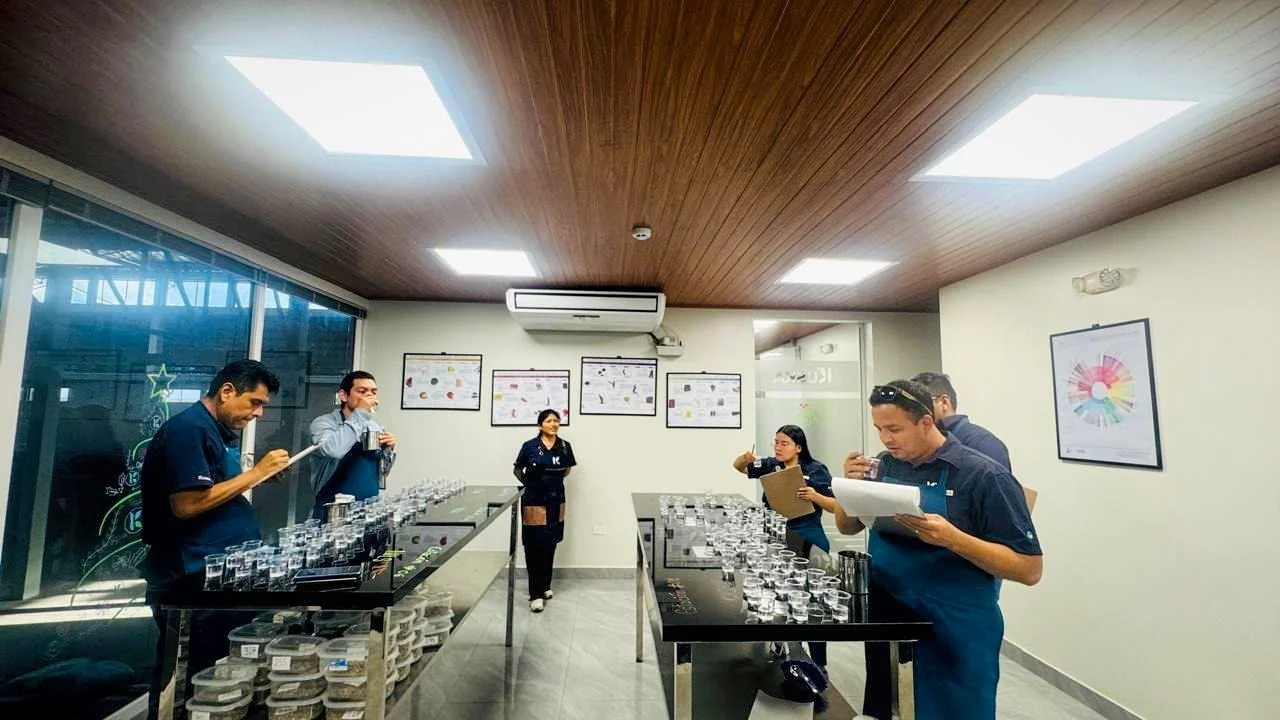
Specialty coffee is generally understood as coffee that meets a higher sensory threshold, traditionally assessed through cupping: a structured process involving controlled brewing conditions, calibrated tasting, and trained evaluation. A Q-grader is a professional trained to assess coffee quality through sensory and technical criteria. There are no shortcuts and no simple machine equivalent. The value of a specialty coffee is, by definition, mediated through human judgement under specific conditions.
A smallholder farmer in the high-altitude valleys of the Peruvian Andes, precisely the kind of geography where altitude, climate, biodiversity, and varietals can converge to produce exceptional cup quality, may be growing coffee worth a meaningful premium over the C price.
Even if the farmer is well aware of the quality of their crop, they face a first problem: isolation. Without access to processing infrastructure, quality control, financing, or market access, the smallholder must often sell to whoever shows up at the farm gate, at whatever price is offered. Knowing they are getting fleeced, the farmer may still sell, because the alternative is watching the harvest rot.
Who shows up is often what is colloquially called a coyote: an informal local buyer. Coyotes may collude to divide territories and avoid competing with one another, directly at the expense of farmers. Rent-seeking, in one of its purest forms.
The coyote sells to an aggregator, who sells to a processor, who sells to an exporter. Each link takes its cut.
Just like a Saskatchewan grain elevator, cooperatives can play a critical role in protecting farmers from rent-seeking. By aggregating production, cooperatives give smallholders collective bargaining power, access to export markets, and, critically, the processing and quality-control infrastructure needed to assess and capture the premium their coffee may command.
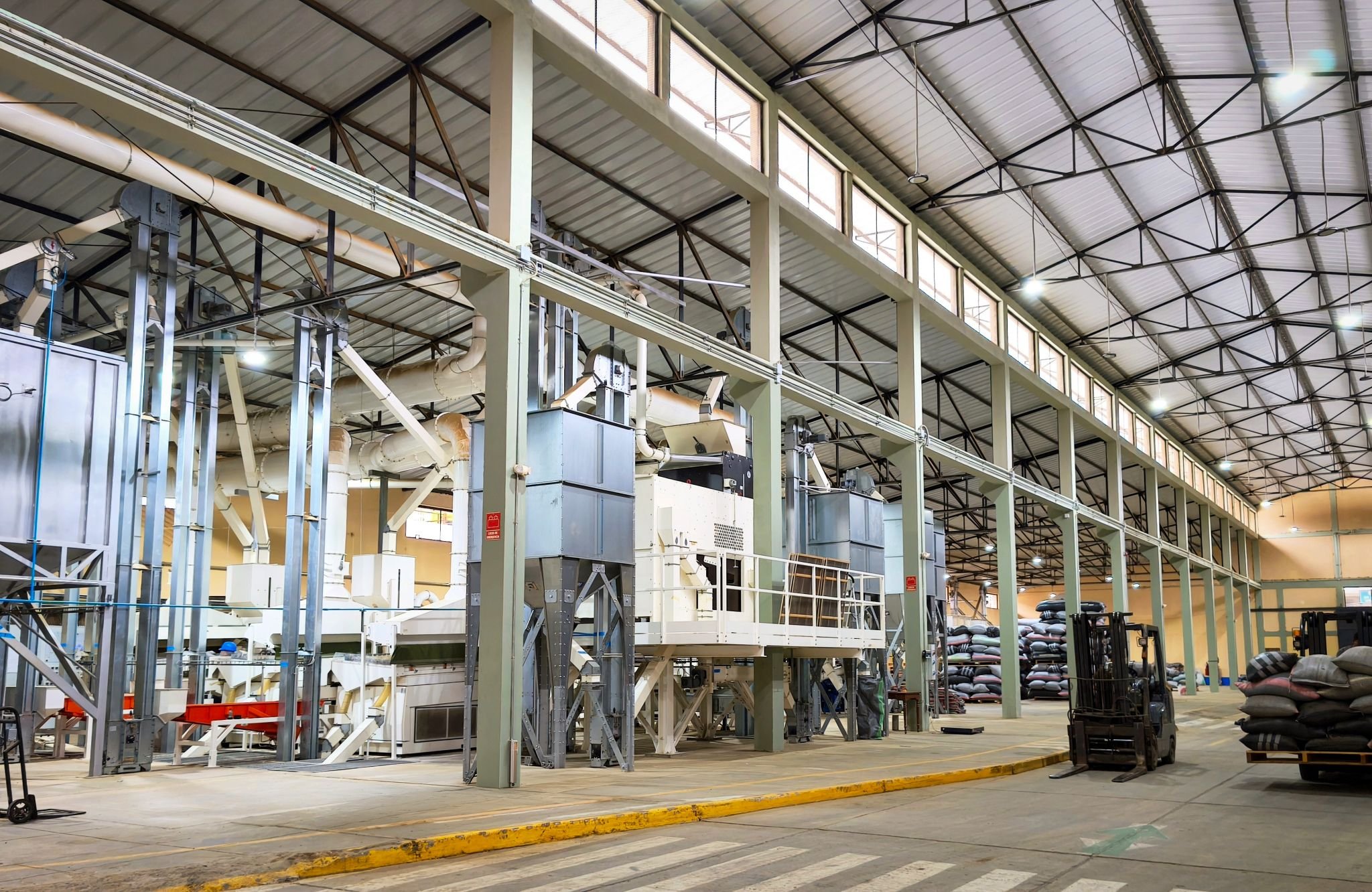
The cooperatives that function well can bypass traditional commercialization channels entirely, exporting both conventional and specialty coffee directly. COCLA, a cooperative central based in Quillabamba and our partner in the Kuska project, is one of the most established examples in Peru: a genuine regional institution built over decades.
But cooperatives, even the most established, face headwinds that compound on one another.
The first is capital. Running a cooperative that genuinely serves its members requires investment: post-harvest processing equipment, dry mills, quality-control infrastructure, logistics, and working capital to pay farmers at delivery rather than after final sale. Most coffee cooperatives in Peru are chronically undercapitalized.
The specialty premium they unlock for their members is real, but capturing it requires infrastructure that costs money the cooperative often does not have, and that commercial lenders are increasingly reluctant to provide to organizations whose assets are largely agrarian and whose members are smallholders without formal collateral.
This problem has been exacerbated in recent years by rising coffee prices. At first glance, this should be good news for farmers who have spent years struggling to break even. But it creates a genuine challenge for cooperatives whose financial resources have not scaled along with the C price. Higher prices mean higher working-capital needs. A cooperative that cannot pay quickly enough loses volume to coyotes, even when it offers a better long-term value proposition.
The second headwind is governance. A cooperative is only as strong as the institutions running it, and here the asymmetry introduced by colonial structures reasserts itself. Managing a cooperative requires legal literacy, financial management, commercial discipline, and organizational capacity that were never systematically built in these communities.
When governance breaks down, the cooperative can become another extraction mechanism rather than a protective one: leadership capturing premiums, members defecting to coyotes when the cooperative cannot pay on time, and trust eroding slowly, then proving very difficult to rebuild.
This erosion of trust also affects global buyers. Many once demanded to purchase directly from cooperatives through models such as direct trade. Increasingly, however, contract defaults and operational complexity are forcing buyers to rely on more structured intermediaries, such as traders and exporters. This further weakens the cooperative’s value proposition toward its members.
The third headwind is traceability.
In theory, traceability should benefit smallholder farmers. If a buyer can know exactly where a coffee comes from, who produced it, how it was grown, and under what conditions, the farmer should be better positioned to capture the value of that specificity. Specialty coffee, after all, is built on provenance: altitude, variety, microclimate, processing method, producer identity, and story.
But in practice, traceability can become another layer of complexity imposed on those least equipped to absorb it.
For a cooperative, traceability is not a romantic label on a bag of coffee. It requires systems: member registries, farm data, harvest records, lot separation, warehouse controls, quality documentation, chain-of-custody procedures, export files, and increasingly, proof that production is not linked to deforestation. Each requirement may be reasonable in isolation. Together, they create an institutional burden that undercapitalized cooperatives are expected to carry.
This is the paradox: the more sophisticated the market becomes in its demand for transparency, the more infrastructure is required to participate in it. Without that infrastructure, traceability does not empower the farmer. It excludes them.
Cooperatives are now being asked to do much more than aggregate coffee and negotiate better prices. They must become data managers, compliance officers, quality-control labs, logistics coordinators, financiers, and exporters, all while maintaining trust with members who may still be tempted by the coyote paying cash at the farm gate.
Without capital, governance capacity, and deliberate institutional investment, traceability risks becoming another mechanism through which value flows away from the field. Not because transparency is bad, but because transparency without capacity is extraction with a fancier name.
This is why the coffee value chain cannot be understood merely as a market. It is an institutional landscape. It is a system where value is created in one place, priced in another, financed somewhere else, and often captured far from the field.
Ayni survived because reciprocity was not merely a custom. It was infrastructure. It created obligations, trust, labour mobility, and resilience inside communities long before formal contracts or modern financial systems arrived.
The question now is whether modern institutions can be built with the same spirit: close enough to the ground to serve communities, strong enough to face markets, and patient enough to resist becoming another layer of extraction.
As we were driving from the hotel in Quillabamba to what would be my first-ever visit to a coffee farm, we left the main rural road and passed beneath an arch.
On the arch was written, in Spanish:
Welcome to Vilcabamba, the last bastion of the Inca resistance.
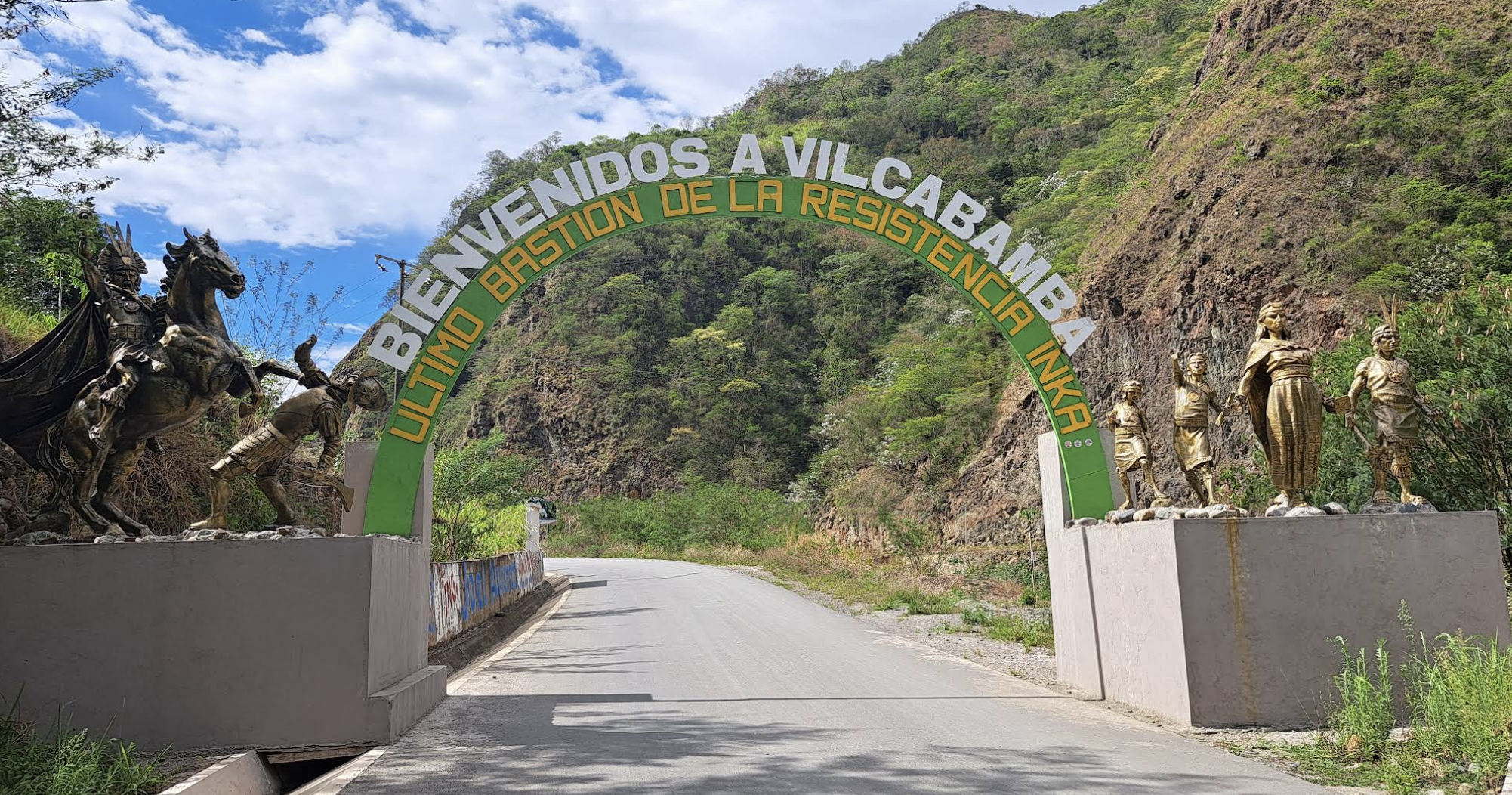
The symbolism was difficult to miss. The last bastion of resistance is no longer a fortress hidden in the mountains. It is a landscape of smallholder farms, fragile roads, undercapitalized cooperatives, and communities still trying to retain more of the value created by their land, labour, and knowledge.
The resistance today is not military. It is institutional.
It is the slow, difficult work of rebuilding the capacity to process, negotiate, govern, finance, and sell without having value extracted at every step by those closer to capital than to the field.
